


By Ramneek S. Bhogal, DC, DABCI

As health care practitioners, we are all very well aware of the role that stress plays in our patient’s well-being. We see clinical presentations like anxiety, sleeplessness, insomnia, fatigue, trouble with motivation, moodiness, changes in sexual and/or reproductive health, changes in weight, and even compromised immunity to everyday infections.
One of the most impactful symptoms of stress on patients today is that of weight gain and difficulty losing weight. When we dig into this elegant “stimulus and response” type of mechanism, it’s amazing how the secretion of such simple chemicals in the body can trigger such changes in our metabolic health.
Defining Stress
What exactly is this thing we call “stress?” We understand that the human body is influenced by physical trauma, by mental or emotional challenges and by chemical or toxic challenges. All three of these things can be categorized as stress.
So let’s agree on our working definition of stress as being anything threatening or stimulatory to the point where it causes us to respond in an inadequate or dysfunctional manner. It could be physical, chemical or of a mental/emotional etiology. Basically, this is the body’s natural instinct to protect itself. These very stressors are what impact weight and metabolism physiology.
The great scientist and physician, Hans Selye, gave the world the General Adaptation Model of stress in 1936. Simply put, he organized stress into three stages.
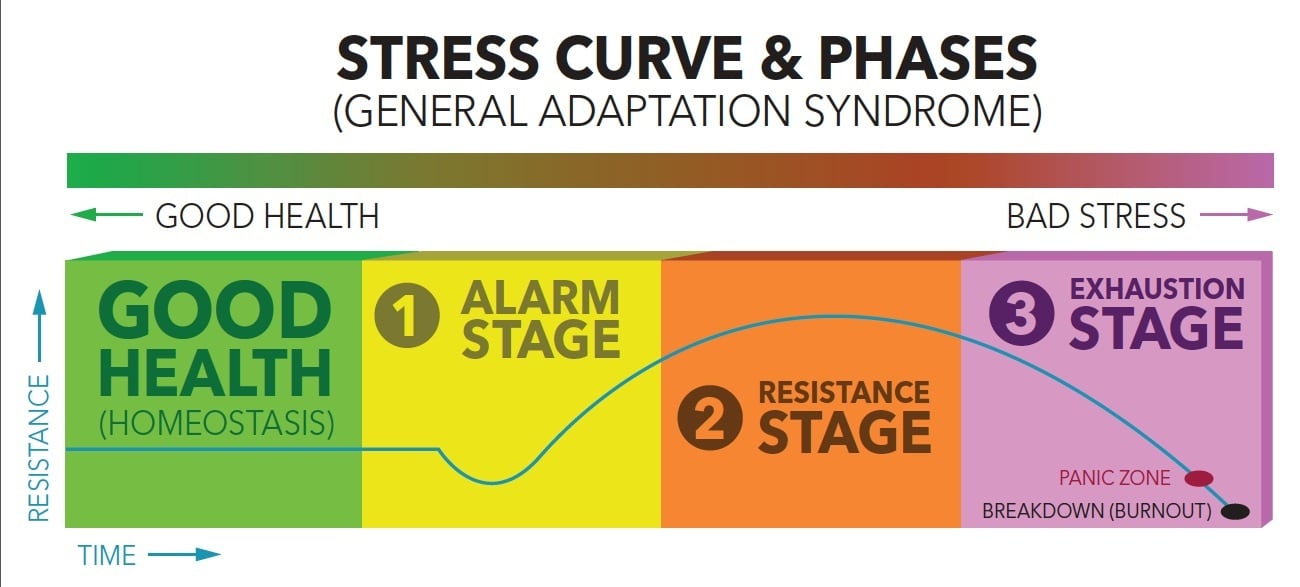 The First Stage of Stress: ALARM STAGE
In this stage, stress and cortisol output should function as expected. In the face of a stressful event, your body alarms you with a sudden jolt of hormonal changes, namely an elevation of catecholamines, and you are now immediately equipped with enough energy to handle it. Then you normalize relatively quickly. In short…cortisol rises and then falls back to normal.
